









Let’s be real—not every task box is a winner.
If you’ve ever watched a student breeze through a task… or stare at it like it came from outer space… you already know: there’s a difference between a task box that looks good and one that actually works.
You’re not alone in wondering:
“Why isn’t this working for my students?”
Task boxes are supposed to build independence—but only if they’re built with intention.
The good news? You don’t need 1,000 activities or an entire weekend of prep to make it happen.
You just need a clear system, and a few key ingredients.
This post is your jumpstart: we’re breaking down what truly makes a task box effective—so you can save time, build independence, and feel GOOD about your task box system.
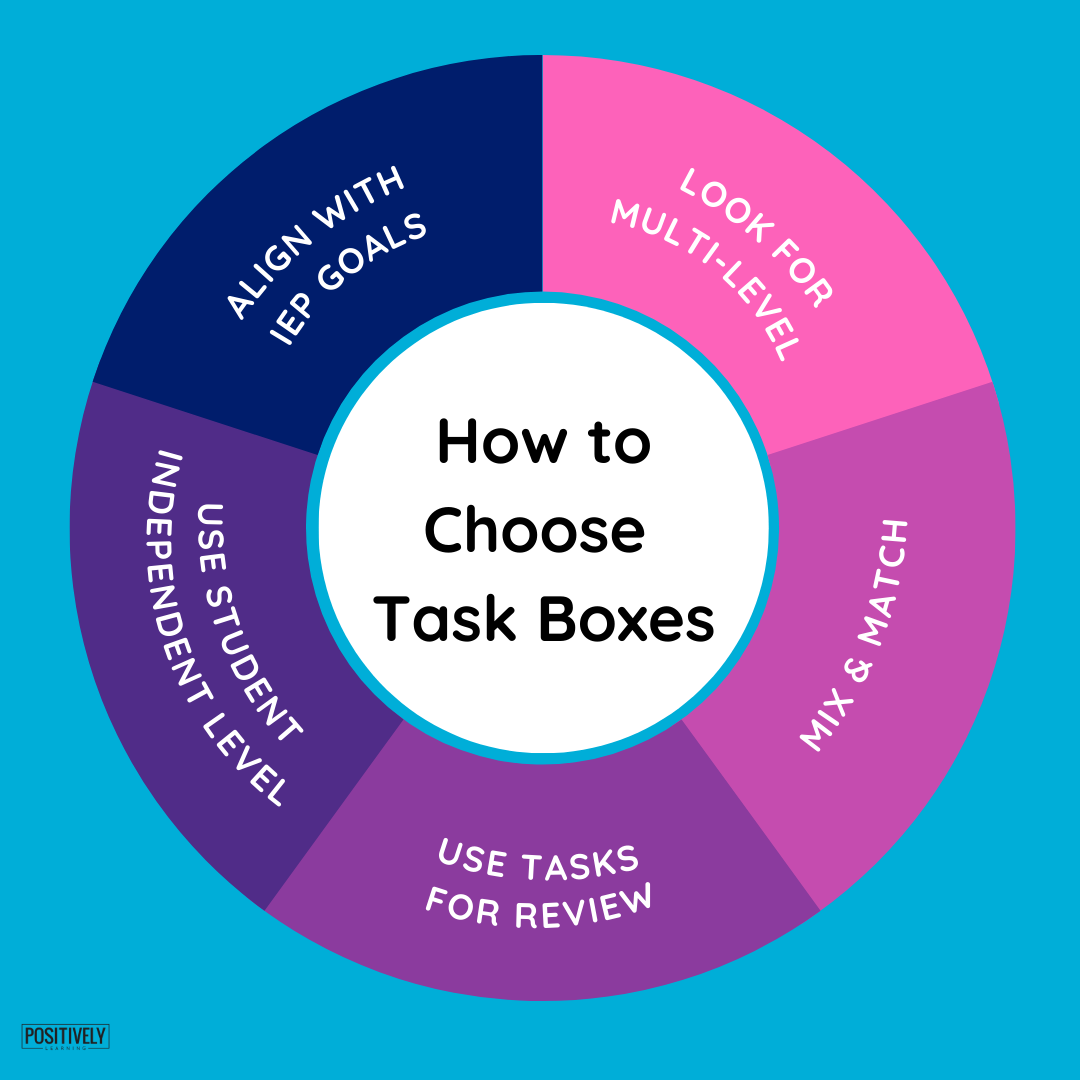
Start with your students' individual education plans (IEPs). When creating or selecting task boxes, review each student's IEP to identify their specific learning needs, goals, and any accommodations. This will help you choose task boxes that are tailored to each student's unique needs and abilities. Additional resources, including fine motor skills and other hands-on tasks, can definitely be added once the IEP skills are in place.
Look for task boxes that offer multiple levels of difficulty. Many task boxes offer different levels of difficulty, which can be a great option for students with varying skill levels. Any particular task can also be extended by adding additional materials, from manipulatives (“show what you know” with math skills) to dry erase markers (“explain your thinking”). These add-ons are the perfect way to extend the task boxes you're already using.
Mix and match tasks. Sometimes the best solution is to create your own task boxes, but there's not always time for this. Just like we can add extensions, we can also use our existing tasks in more than one way. Example: students can use beginning sound picture cards with magnetic letters as is and then use the same pictures for syllable identification. Reading CVC and CVCe words? Great! When students complete the task, use the same task cards for sorting by long and short vowel sounds (phonemic awareness). Even if a task box is not perfectly aligned with your students' needs, you can often modify it to better meet their needs.
Use task boxes as a review tool. Task boxes can be a great tool for reviewing concepts that students have already learned. By using tasks that review previously learned concepts, you can create independent work tasks that are relevant across multiple grade levels or subject areas.
Focus on student independence. Don't worry if tasks feel too “fun” or “easy.” The purpose of using task boxes is to help support students' task completion as independently as possible. Select tasks that are at students' independent level and save instructional tasks for small groups. If you feel that any academic skills may be above students' independent level, consider substituting with fine motor tasks featuring hands-on materials (pipe cleaners, clothes pins, play dough, or pom poms) and visual discrimination tasks. Another consideration is using errorless learning in independent work stations to promote student independence and success.
The best part of task boxes is that they can be customized to meet the individual needs of your students and can be adapted throughout the school year. Rotating activities from a large task box bundle keeps learning fresh and engaging. Worried about having too many work task boxes? Most special education teachers will argue there's no such thing, but if this is a concern, a great solution is to incorporate individual tasks with early finishers and as morning work. I promise even your older students will enjoy learning with them!
Want a quick walkthrough of what actually makes a task box work?
This video breaks it down with real examples, common mistakes to avoid, and the 5 must-haves every independent task should include.
Overall, task box activities are a great way to incorporate hands-on manipulatives and independent skills into your special education classroom in a structured way that targets a variety of skills. With a little creativity and low prep,a task box system can be a great addition to any special education classroom!
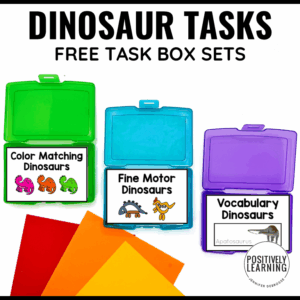
Good news! The Task Box Dollar Club offers a HUGE variety of different boxes to quickly fill up your independent work systems. You'll receive instant access to a growing library of task box printables, including early literacy, early math, social emotional learning, fine motor, and so much more.
If low-cost and low-prep sounds good to you, check out the Task Box Dollar Club here: