











There's a moment most special education teachers can point to.
It's the first time they sat down with one student — really sat down, focused — and looked up to find the rest of the class still working.
No one was waiting. No one had wandered off. No one needed something.
It sounds small. It doesn't feel small.
When an independent work system is working, the most obvious change is what stops happening.
Students stop waiting for you to tell them what to do next. They stop needing constant redirection to stay on task. They stop falling apart the second your attention is somewhere else.
But what starts happening matters just as much.
Students build confidence. There's something that shifts when a student realizes they can start a task, work through it, and finish it — all on their own. That feeling compounds. Students who used to avoid tasks start attempting them. Students who needed prompting for every step start working without it.
And teachers get their classrooms back.
Not perfectly. Not all at once. But gradually, the day starts to feel more manageable. You can pull a small group without dreading what's happening on the other side of the room. You can collect data without it feeling impossible.
You can actually teach instead of just manage.
It's worth being honest about this.
An independent work system takes time to build and time to teach. The first few weeks are an investment. Students need to learn the routine. Tasks need to be the right fit. The structure needs to become familiar before it becomes automatic.
But the teachers who stick with it consistently describe the same thing: at some point, it clicks. Students understand what to do. The routine holds. The classroom starts to feel different.
That's the shift this whole blog series has been pointing toward — from a classroom that depends on constant teacher direction to one where students can work independently and teachers can finally focus on teaching.
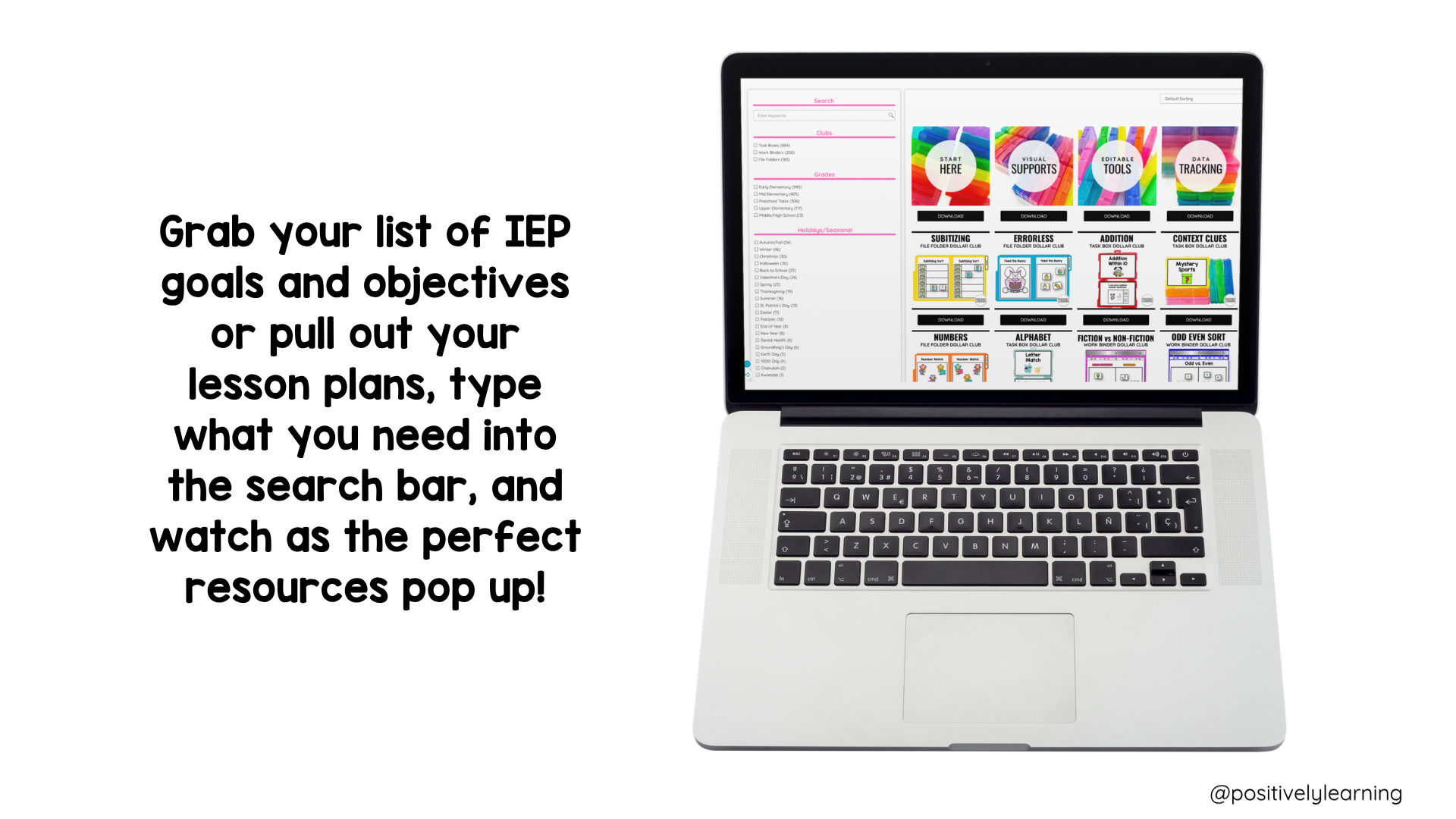
Building an independent work system from scratch is a lot to take on when you're already managing everything else that comes with a special education classroom.
The Independent Work Club was built to remove that barrier.
Inside the club, you get a full library of structured, ready-to-print activities organized by skill — so you're not creating independent work materials from scratch. You also get the system tools and templates to set up your independent work structure so students know exactly what to do.
The tasks fill the system. The system makes the tasks work. That's the combination that actually creates independence.
If your independent work keeps falling apart and you're ready to try something different, this is worth a look.

|

|

|