










You have a collection of task boxes ready to use, but how do you know which ones are right for each student?
Maybe one student finishes everything in minutes while another waits for you to explain every step. You’re trying to provide meaningful work, but you also need activities students can complete without constant adult direction.
The best task boxes for independent work match skills students already know, have a clear beginning and end, and can be completed with an appropriate level of support.
Choosing task boxes isn’t about finding the most colorful activity or matching a grade-level label. It’s about selecting work that helps each student practice successfully while building independence.
Here’s how I would approach it.
Before looking through your task box collection, think about the student.
What skills can they complete successfully without you teaching them at the same time?
Independent work is generally an opportunity to practice familiar skills. It’s not where we want students struggling to figure out a brand-new concept without instructional support.
For example, imagine a student who is learning to identify colors.
During teacher-led instruction, you’re introducing new colors, modeling responses, and providing feedback.
For independent work, you might choose a familiar matching activity using colors the student already recognizes.
The skill is still meaningful. But the student can focus on completing the work routine instead of learning an entirely new task.
A student may still need support while learning an independent work routine. The important distinction is between needing help with the routine and needing ongoing instruction to complete the task itself.
A student might understand the skill but still struggle to complete a task independently because the activity itself is confusing.
That’s why I look closely at the structure of the task box.
Can the student tell where to begin? Is the amount of work clear? Will they recognize when they’re finished?
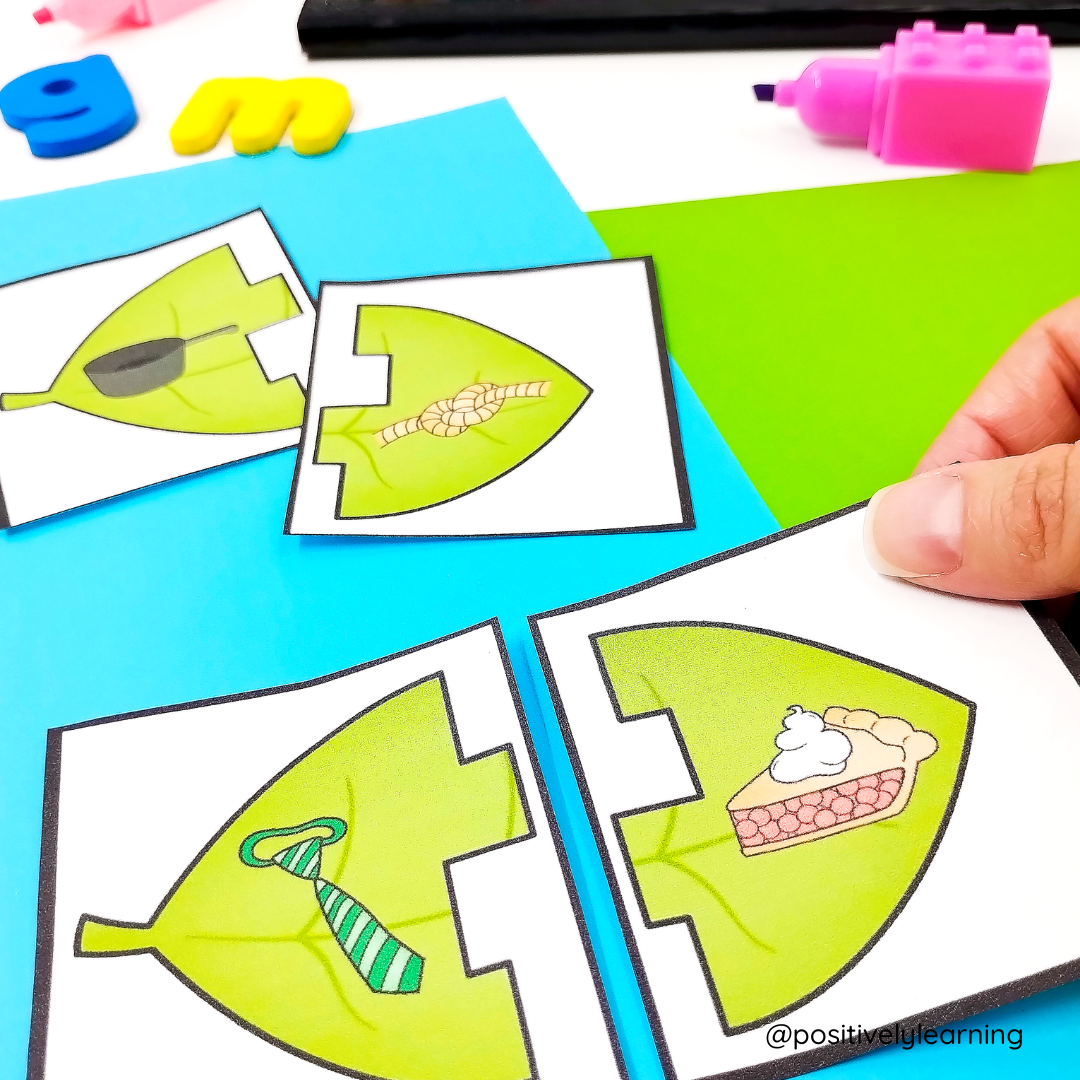
Think about a matching task with six picture pieces and six matching spaces.
The student can see the work that’s available, match each piece, and recognize when all six spaces are filled.
Compare that with a container full of loose materials and a direction that requires an adult to explain when enough work has been completed.
Both activities might practice the same skill. But the first has a much clearer finish.
Look for a task that:
Two students in the same classroom might need very different task boxes.
One student may be working on object matching and sorting. Another may be practicing number identification, categorization, or functional skills.
Even students working on similar academic goals might need different response formats.
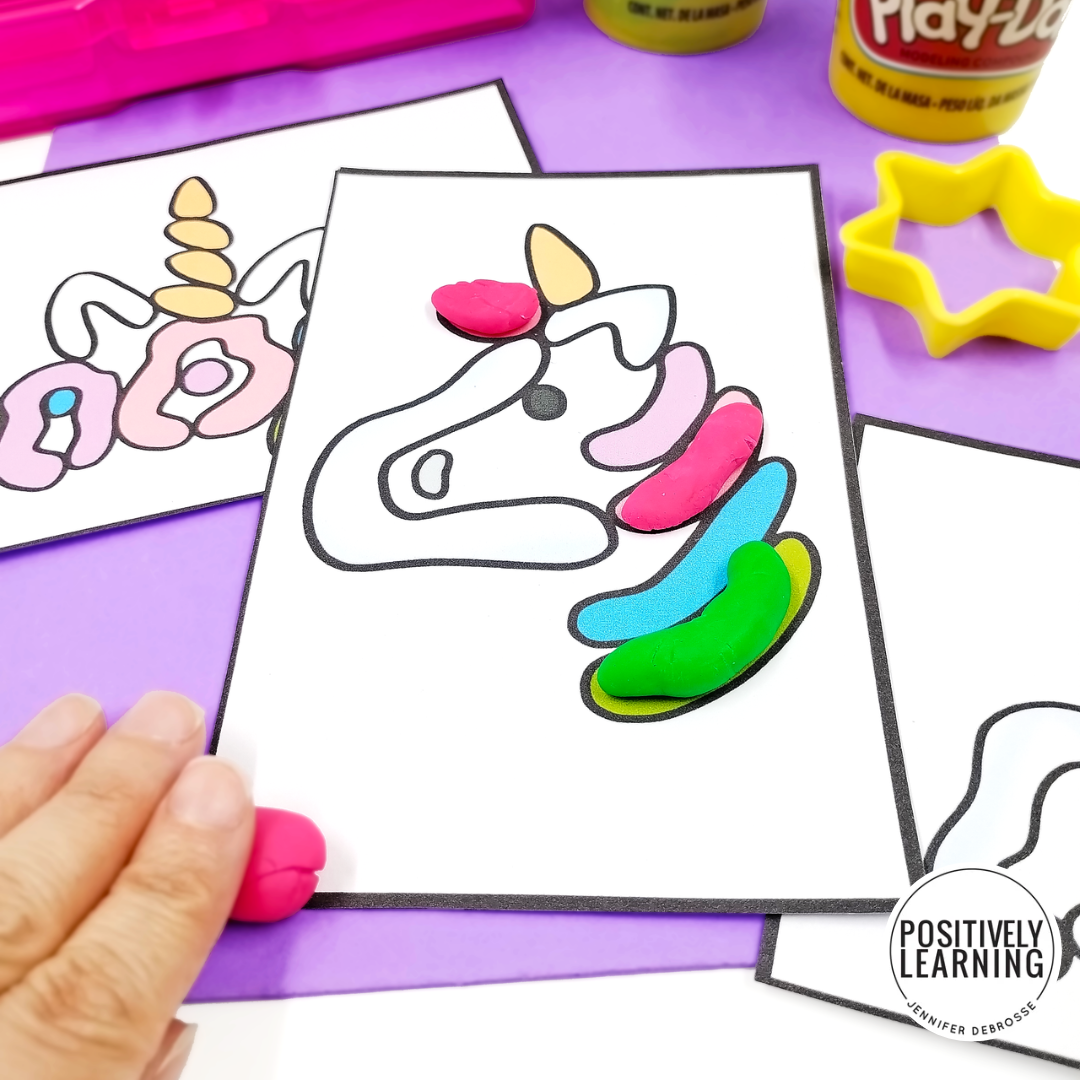
For example, one student might match pictures using removable pieces. Another might sort objects into containers. A third might complete a familiar paper-based activity.
All three can be meaningful independent tasks when they match the student’s current abilities and support needs.
We want to consider:
Skill level: What does the student already know?
Response format: Can the student physically access and complete the activity?
Amount of work: Is the task manageable for the student’s current work routine?
Visual support: Does the student understand what to do without repeated verbal directions?
Purpose: Does the activity provide useful practice connected to the student’s learning needs?
The right task box doesn’t have to look the same for every student.
When you’re deciding which activities to put into an independent work system, try this process.
Start with something the student has already learned or is practicing successfully.
It might be matching, sorting, counting familiar quantities, identifying functional items, or completing a simple assembly task.
An IEP goal can help you identify meaningful skills to practice, but remember that the task should match the student’s current level of performance—not simply the final goal written in the IEP.
Now look at the materials.
Can the student understand the task’s action? Can they manipulate the pieces? Is the number of responses appropriate?
A student who understands picture matching may still struggle with tiny pieces, crowded visual layouts, or materials that are difficult to handle.
If the format creates unnecessary barriers, choose another task or adapt the materials.
Ask yourself what happens when an adult steps away.
Does the student know how to complete the activity, or does the task require someone to give directions throughout?
If the student needs extensive instruction to complete the skill, keep that task in a supported instructional setting for now.
If the student understands the skill but is still learning the work routine, provide the appropriate supports and practice the routine separately.
The final step is to actually watch the student use the task.
Notice what happens.
Does the student begin? Are the directions clear? Can they complete the materials? Do they recognize when they’re finished?
If they struggle, don’t immediately assume the task is too difficult.
Look at whether the problem is the skill, the materials, the work sequence, or the support provided.
That observation will tell you whether to keep the task, simplify it, adapt its format, or use it during instruction instead.
Here are three examples of how task selection might look in a special education classroom.
A student is just beginning to use an independent work system.
Instead of choosing several new or challenging activities, start with a familiar task they can complete successfully.
For example, a simple object-to-object matching task with a small number of pieces may be appropriate if the student already knows how to match those objects.
Keep the work sequence short while you teach the student how to find the task, complete it, and put it in the finished location.
A student understands a sorting activity but repeatedly asks whether they’re done.
You might select a task with a fixed number of sorting pieces and clearly labeled containers.
When all the pieces have been sorted, the student can see that the work is complete.
The skill hasn’t necessarily changed. The task structure has become easier to follow.
A student follows the work routine successfully and is ready for more variety.
You might introduce a different familiar skill, a larger amount of manageable work, or a more complex response format.
Continue monitoring independence rather than increasing difficulty simply because the student finishes quickly.
The goal is meaningful practice—not making every task harder.
This is where it’s helpful to separate two questions.
Does the student know the skill?
And:
Does the student know how to use the independent work routine?
If the student doesn’t know the skill, provide instruction and supported practice before expecting independent completion.
If the student knows the skill but waits for directions about what comes next, the issue may be the routine or the visual supports.
That’s why choosing the right task boxes is only one part of building an independent work system.
The materials matter, but so does the structure around them.
You can read more about that in How to Build an Independent Work System.
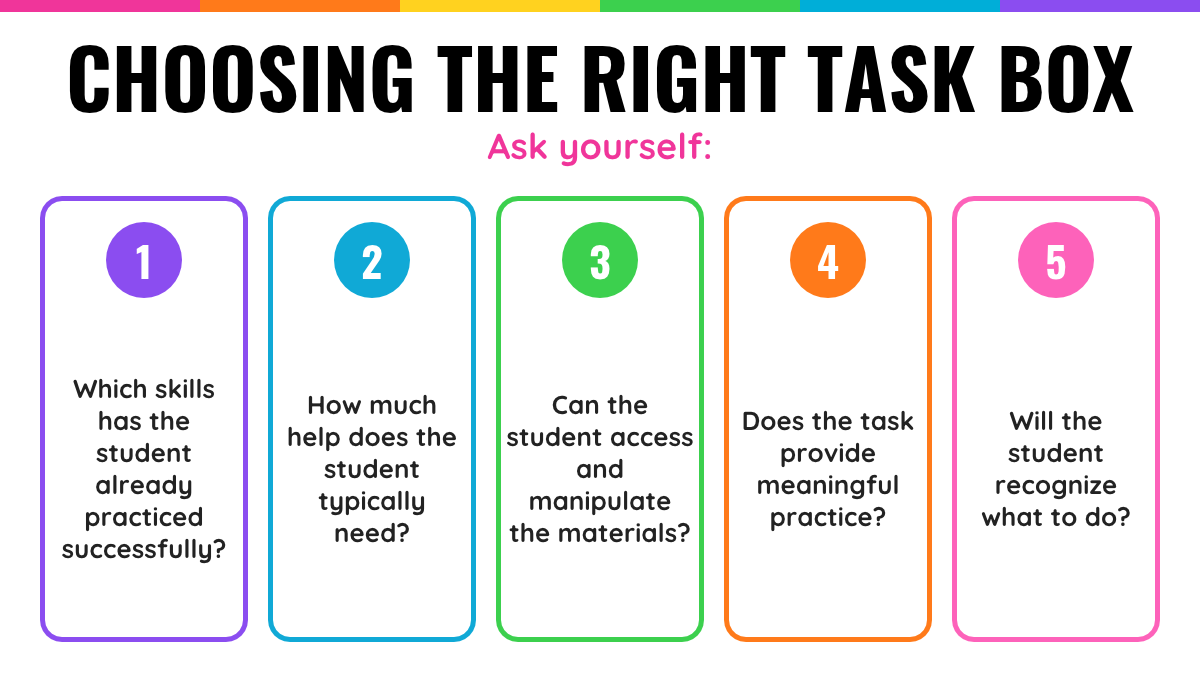
Before adding a task to independent work, ask:
You don’t need a complicated system for choosing tasks. You need a clear way to match the materials to the students in front of you.
And remember, the best task box isn’t necessarily the most elaborate one.
It’s the one that provides appropriate, meaningful practice within a routine the student can learn to follow.
Once you know how to select appropriate activities, the next challenge is having enough suitable materials ready to use.
That’s where Task Box Club can help.
Inside the membership, you’ll find a library of printable task boxes across different skills and levels. You can choose resources that match your students rather than creating every activity from scratch.
You’ll still make the instructional decisions, select appropriate work, and teach the routines.
But having ready-to-use resources can give you more time to focus on the part that matters most: helping students build independence.

|

|

|